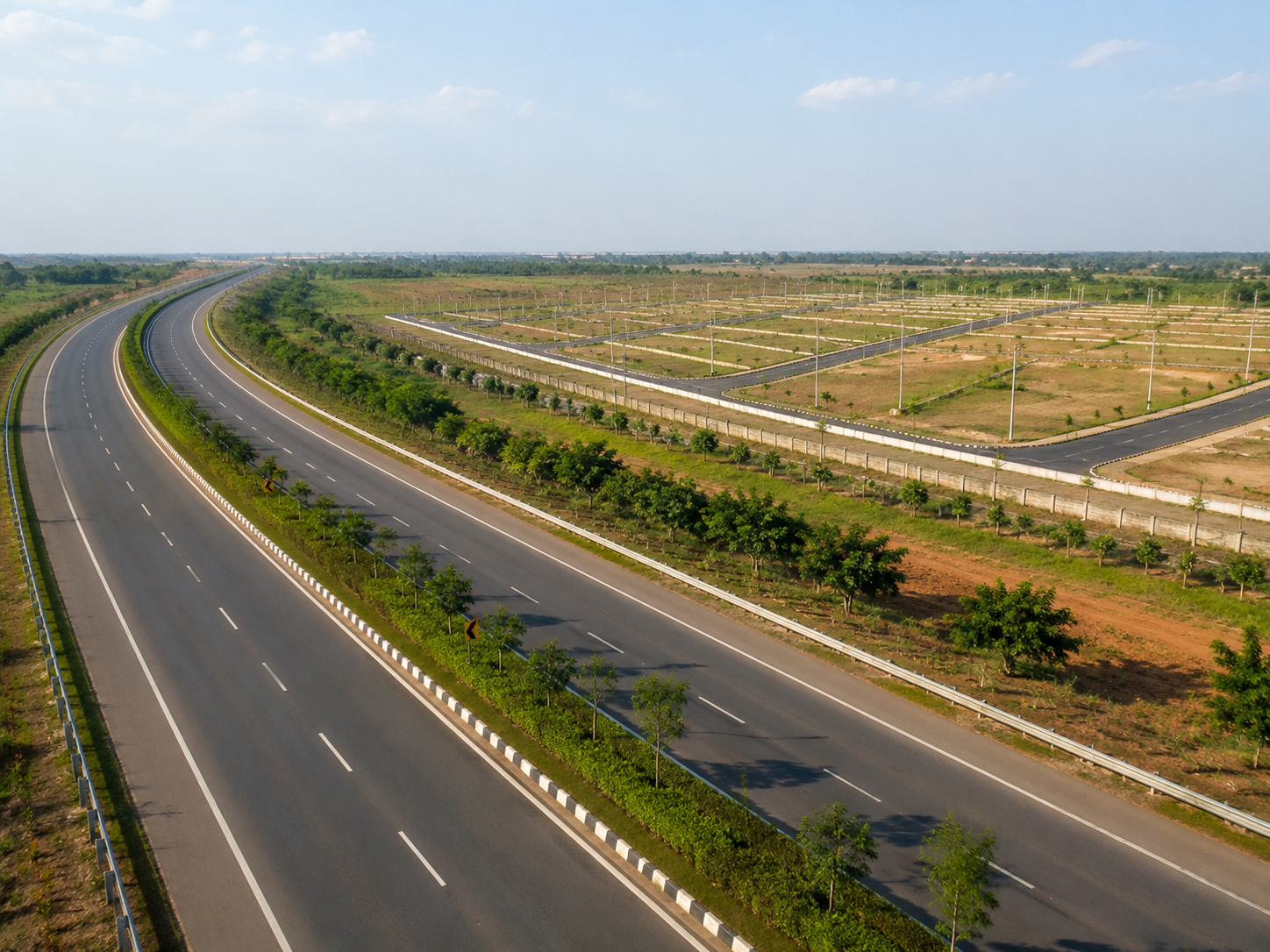
Many real estate conversations begin with a powerful memory: land around Hyderabad was once affordable, major roads and employment centres developed, and some early buyers later saw substantial appreciation. That history is useful—but only when it is analysed carefully.
The wrong conclusion is: “Hyderabad had an ORR, so any land near a proposed ring road will repeat the same result.” The better conclusion is: infrastructure can change a region when it reduces travel time, connects employment and residential demand, receives supporting investment and operates within a clear planning framework.
1. Study the development pattern—not only the success story
A completed success story looks obvious in hindsight. Empty land becomes roads, offices, housing, schools and commercial activity, and people later say that the opportunity was visible from the beginning. In reality, several signals had to work together over many years.
When evaluating a Vijayawada-area plot, ask which of the following are already present, which are formally approved and which are only discussed:
- Existing national highways, bypasses and usable approach roads
- Employment centres, institutions, logistics or industrial activity
- Residential growth and genuine end-user demand
- Approved planning, zoning and layout documents
- Water, power, drainage and other practical infrastructure
2. Existing access matters more than a line on a presentation map
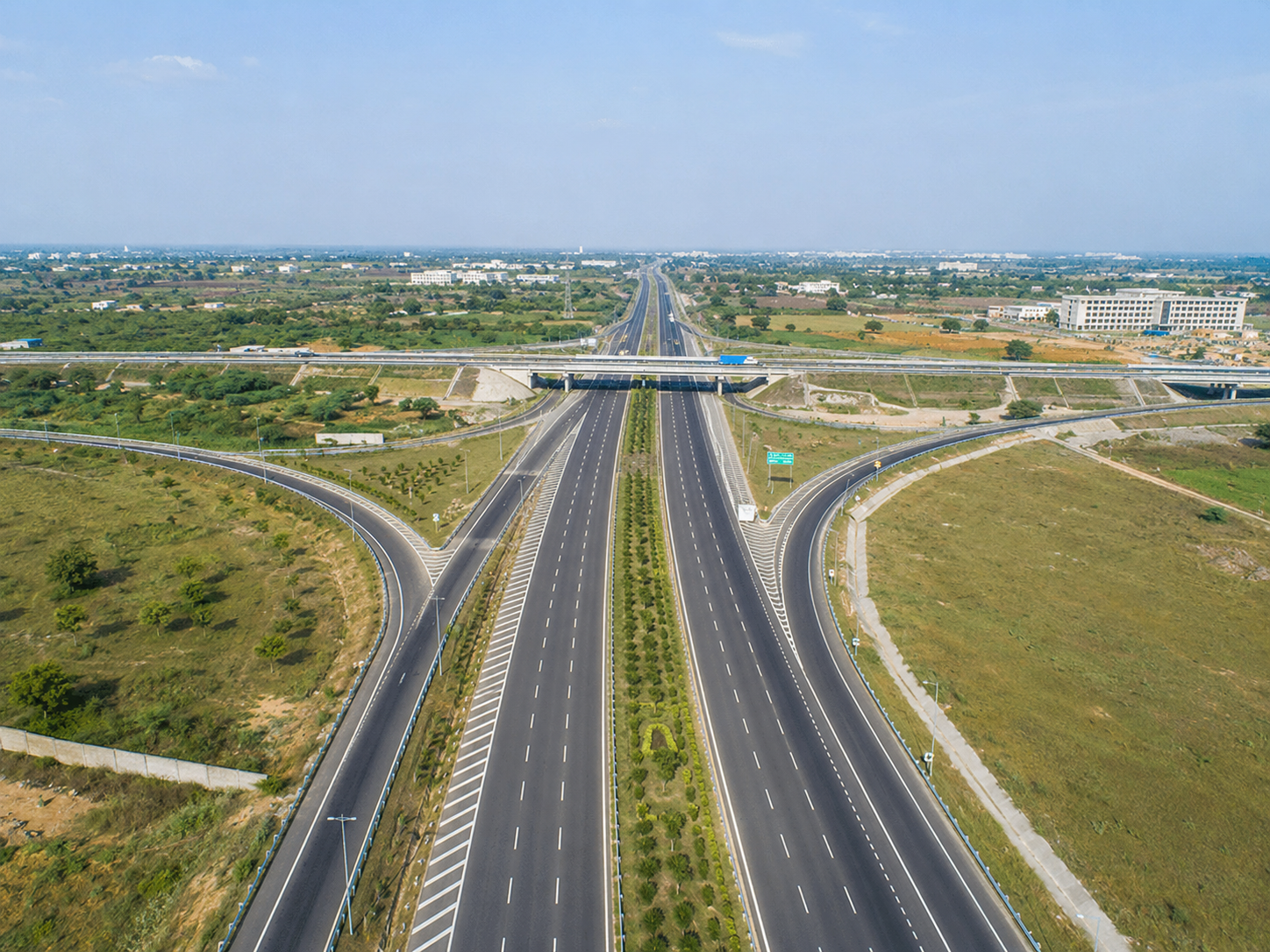
A road proposal can influence expectations, but a buyer still needs legal and practical access today. Travel to the site through the road that ordinary users would take. Observe road width, traffic, bottlenecks, seasonal conditions and whether the route is public and usable.
A location that is “ten kilometres from a major road” may still require a long journey through narrow internal roads. A project that appears close on a map may feel distant in peak traffic. Real travel time is often more useful than straight-line distance.
3. Roads support growth; economic activity creates sustained demand
Infrastructure becomes more valuable when people have reasons to travel, live, work, study or conduct business in the connected region. Hyderabad’s growth was not produced by one road alone. Employment, IT activity, finance, institutions, residential development and private investment interacted with connectivity.
For Vijayawada land research, study nearby activity rather than only future announcements. Useful questions include:
Who will use the location?
Identify residents, students, employees, businesses or logistics users.
What exists today?
Record active institutions, roads, housing, shops and workplaces.
What is officially planned?
Separate sanctioned projects from promotional statements and rumours.
Is demand affordable?
Future buyers must be able and willing to pay the expected price.
4. Planning, zoning and approvals protect usability
A land parcel can be close to infrastructure and still be unsuitable for a buyer’s intended use. Verify title, land classification, sanctioned layout, planning approval, RERA applicability, survey boundaries, road access and registration eligibility.
Approval words used in advertising should be matched with complete documents. Note the authority, reference number, date, survey numbers, conditions and whether the selected plot is part of the sanctioned plan.
5. Measure distance in time, not only kilometres
Buyers often hear that a venture is “near Vijayawada,” “near the airport” or “close to the bypass.” Test each claim during normal traffic conditions. Record the starting point, route and travel duration. Compare the result with competing locations at a similar price.
Also study the last kilometre. The major highway may be excellent, but the final approach road determines daily convenience, construction access and how easily future buyers can inspect the property.
6. Entry price and holding capacity are part of risk management
Early-stage land can require patience. A buyer should not depend on an emergency resale to meet short-term financial needs. Keep adequate savings, avoid excessive borrowing and understand every additional cost—including development, registration, taxes, legal review and boundary verification.
A lower advertised price does not automatically mean a better investment. Compare price with approvals, access, completion status, plot usability and current market demand.
7. Verification converts a story into an investment decision
A strong narrative may create interest, but documents and physical inspection should determine the final decision. Ask for copies before paying and obtain independent professional advice where necessary.
- Verify the seller’s right to sell and the title chain.
- Review the encumbrance record for the appropriate period.
- Match survey numbers and boundaries with the site.
- Check the sanctioned layout and approval conditions.
- Confirm access, development status and registration eligibility.
- Receive the full price breakup and booking terms in writing.
A practical Vijayawada land-buyer checklist
| Question | Evidence to request |
|---|---|
| Is the infrastructure existing, approved or proposed? | Official order, authority record, tender/work status or on-ground inspection |
| Does the plot have usable access? | Sanctioned plan, road record and physical route inspection |
| What creates buyer demand? | Employment, institutions, housing, business activity and market evidence |
| Is the layout legally usable? | Title, EC, planning approval, RERA record where applicable and survey match |
| Can I hold the asset patiently? | Personal cash-flow plan without relying on a quick resale |
Hyderabad ORR is valuable as a case study, not as a return guarantee. Use it to understand how connectivity and economic activity interact, then evaluate the Vijayawada property on its own documents, location and demand.